CustomerDiscover · transact · support
Customer, Employee & Partner Applications
Put business workflows directly into the hands of every user.
ENIGMA engineers customer, employee, field-force, dealer and partner mobile applications that connect intuitive experiences with secure APIs, enterprise data, approvals, notifications, payments and operational systems.
Role-Specific Experience
Different journeys for customers, teams and partners
Connected Operations
APIs, workflows, approvals and enterprise systems
Reliable Product Delivery
Security, testing, deployment and lifecycle support
✓Product design, identity, permissions, device data, backend access, releases and analytics remain governed across the full mobile application lifecycle.
Connected Mobile Product
One backend. Role-specific experiences.
Mobile actions continue into governed business workflows instead of ending at the screen.
EmployeeWork · approve · report
PartnerOrders · claims · updates
Operations AppGood morning
3
Today’s priority
Complete assigned customer visit
TTasksAssigned workflow
VVisitsField activity
OOrdersStatus & action
SSupportConnected service
Offline-safe sync2 queued actions ready
Ready
API GatewayIdentity · policy · routing
CRM / ERPTransactions · approvals · data
Product OperationsAnalytics · releases · support
ExperienceRole-aware
ConnectivityOffline-safe
SystemsAPI-connected
Selected Mobile Products
Published applications built around real operating workflows.
These products show how ENIGMA adapts mobile engineering to very different operating models: agriculture and farmer services, legal consultation, and solar customer operations.
NK
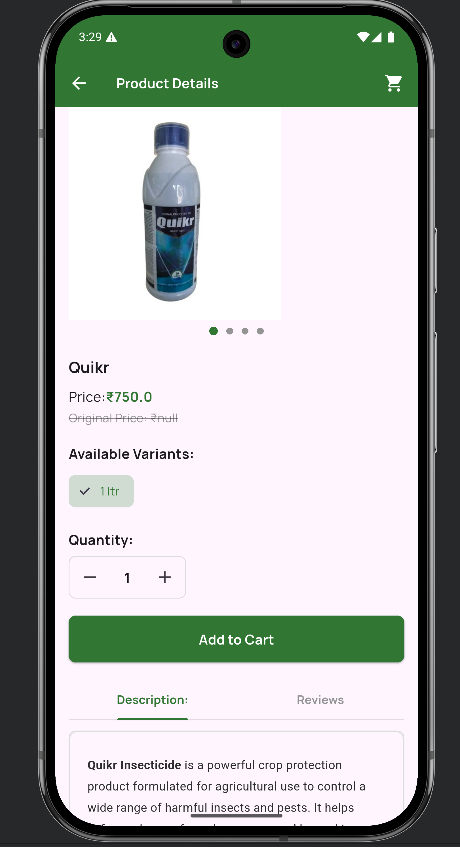
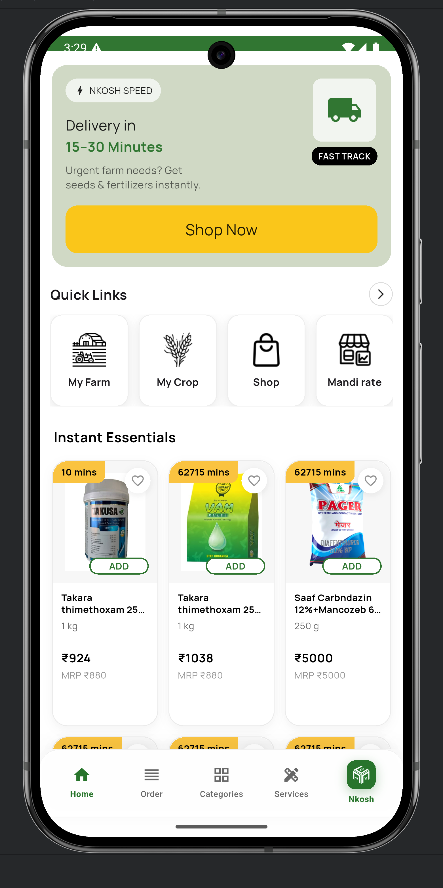
Agritech · Farmer Services
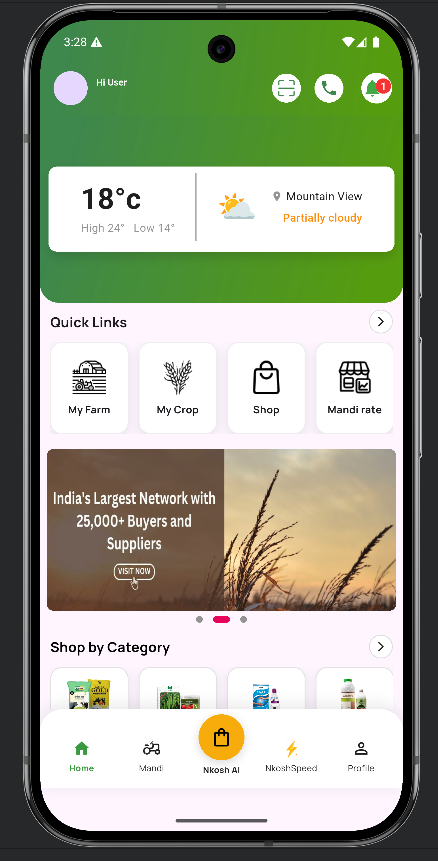
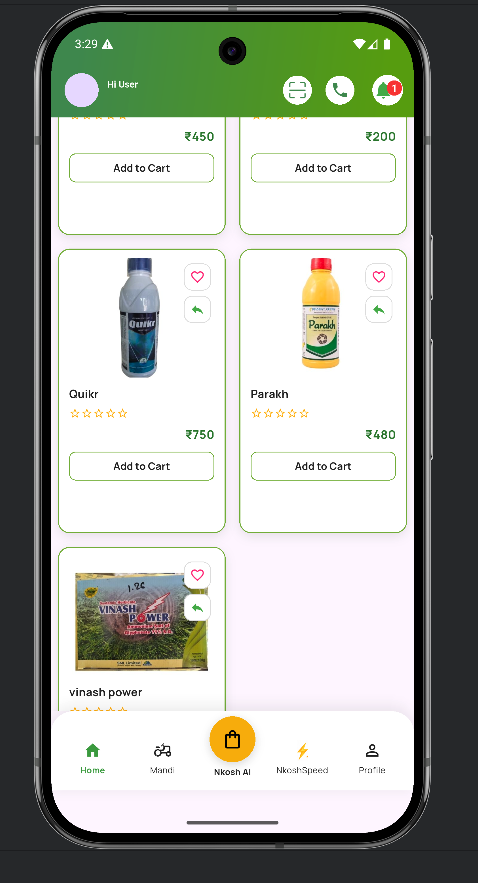
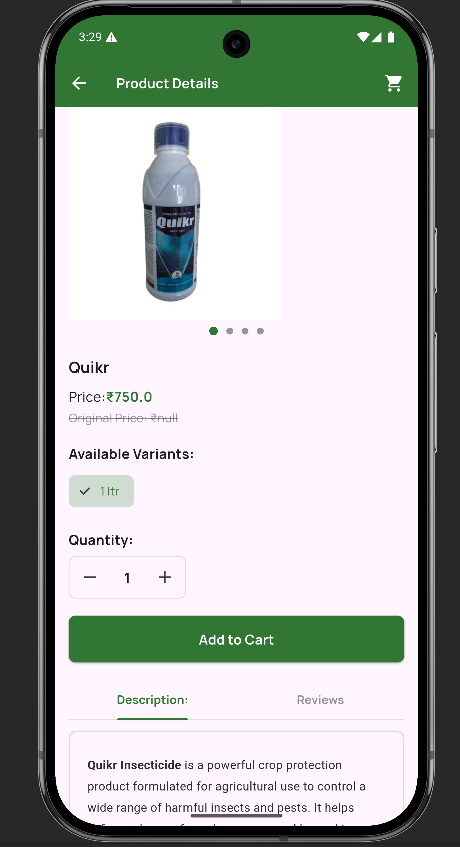
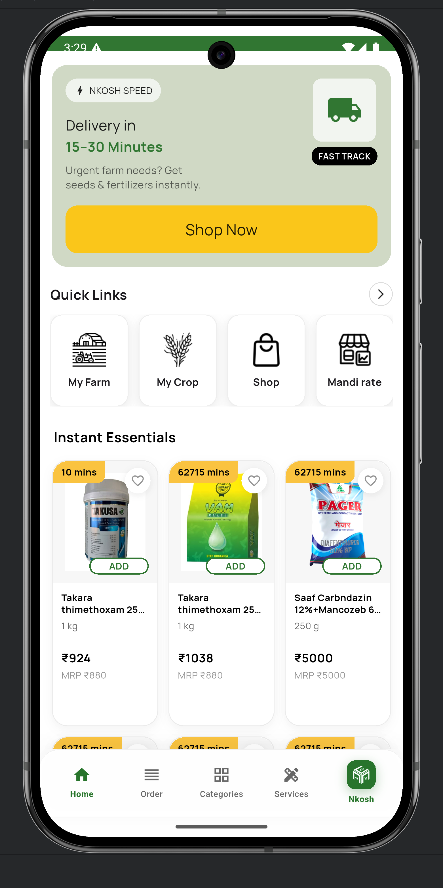
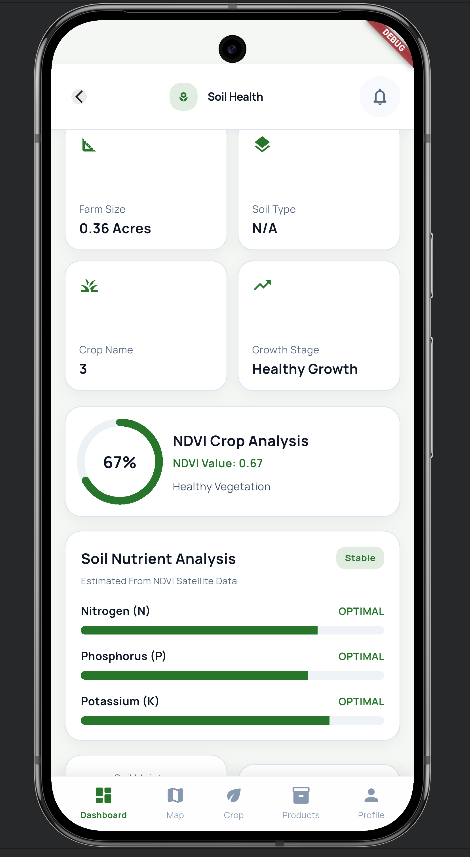
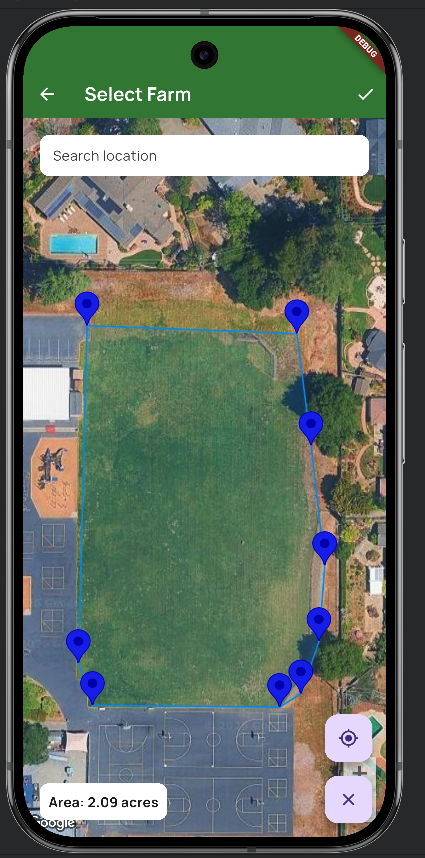
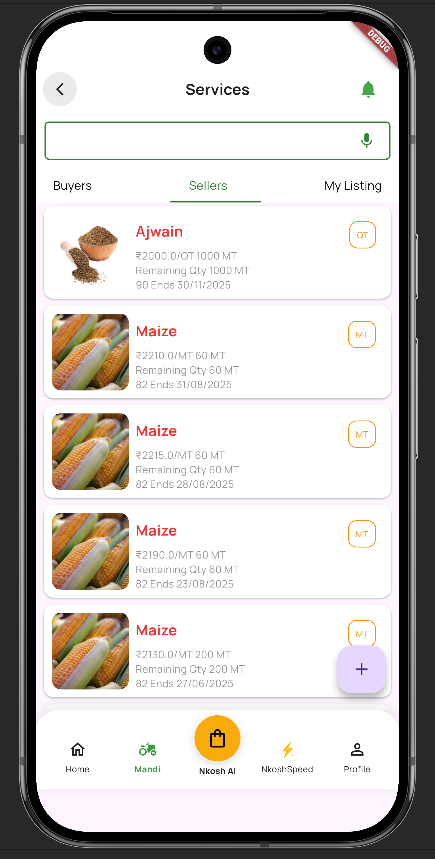
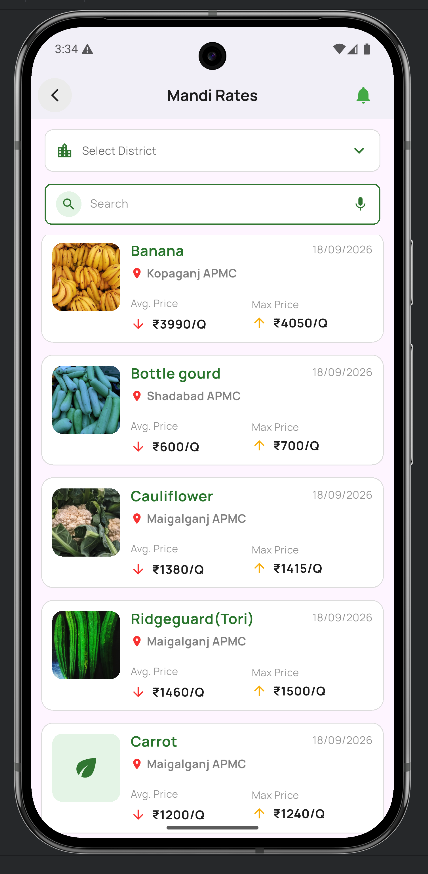
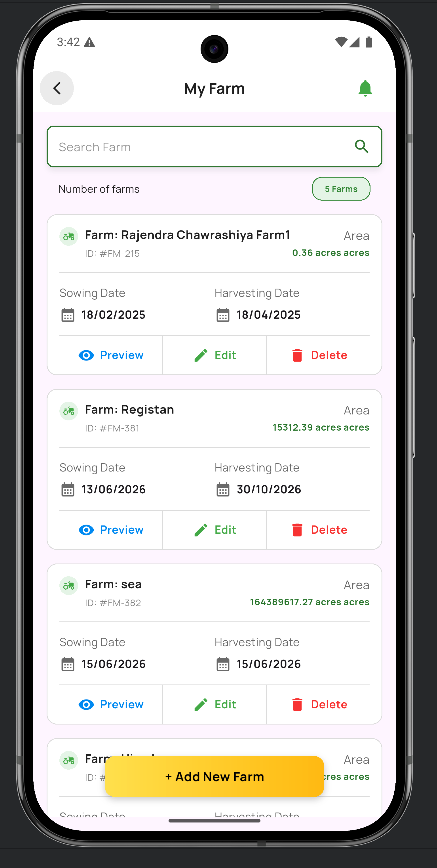
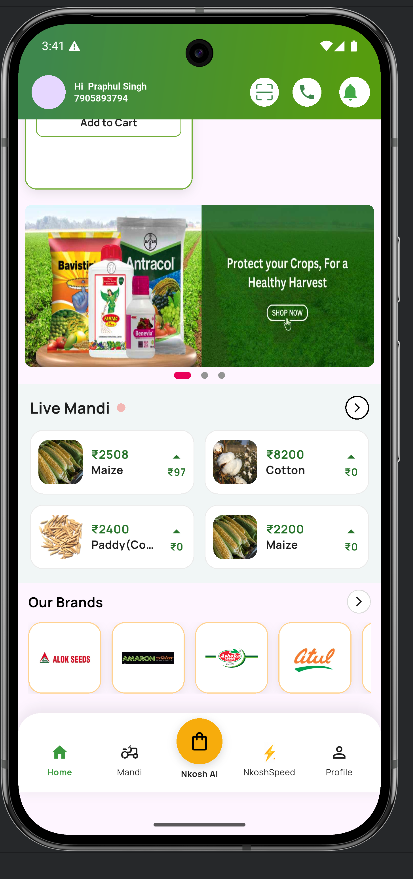
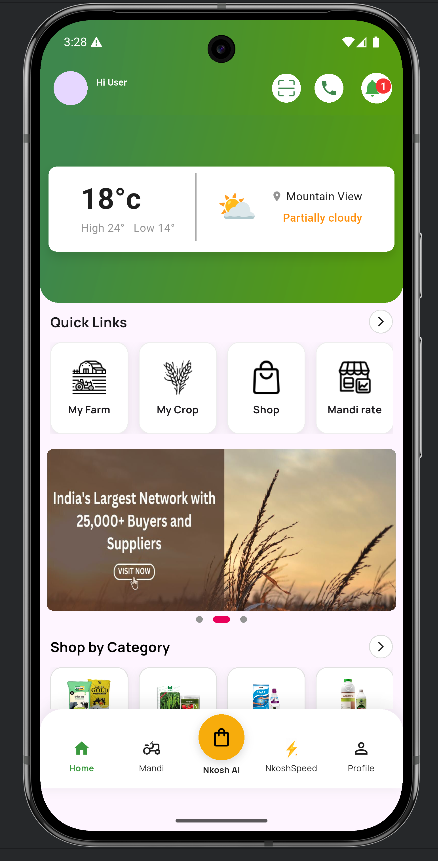
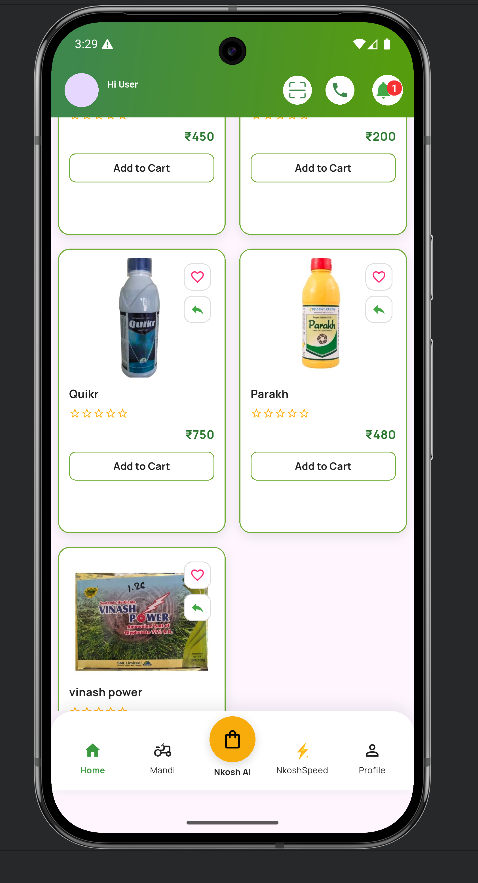
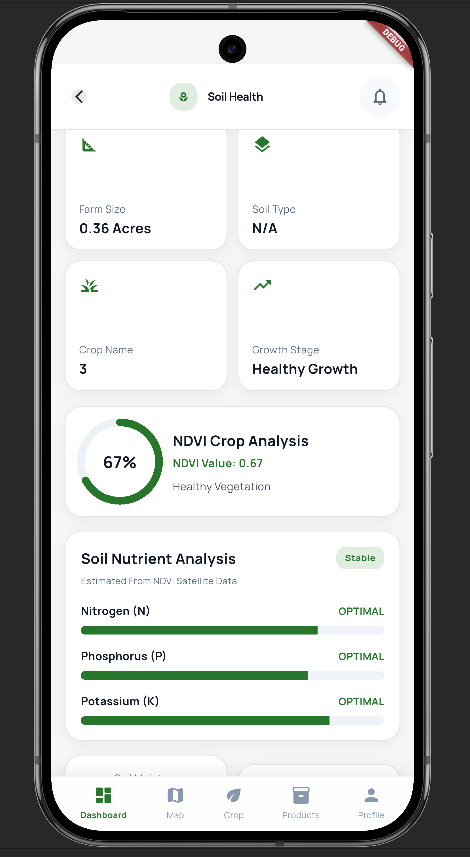
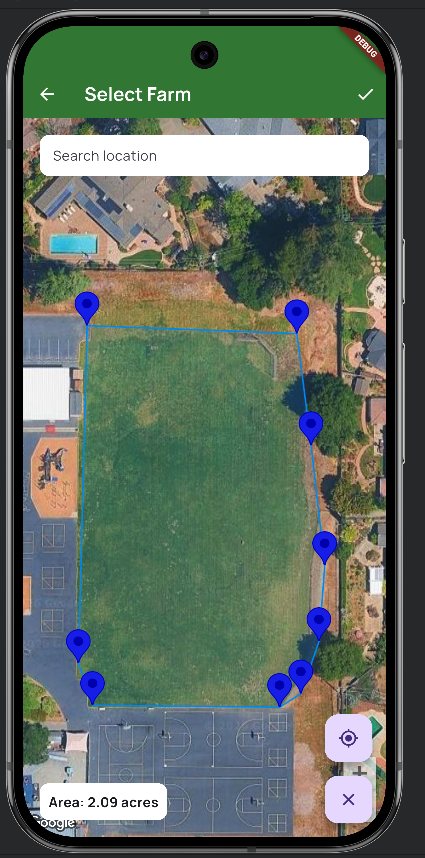
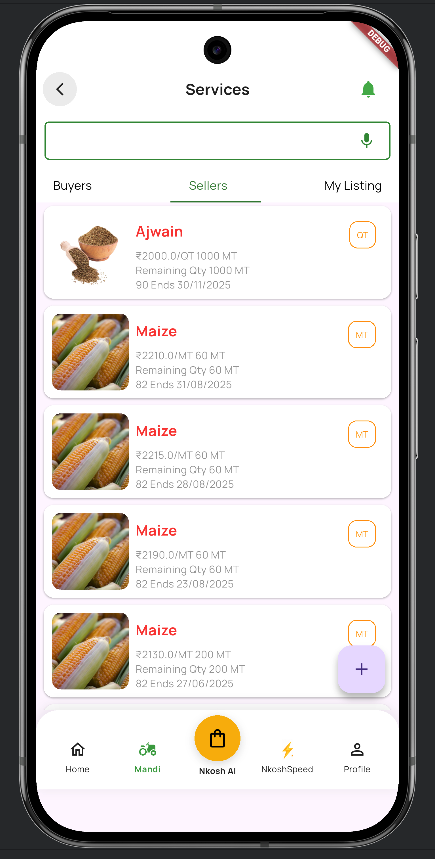
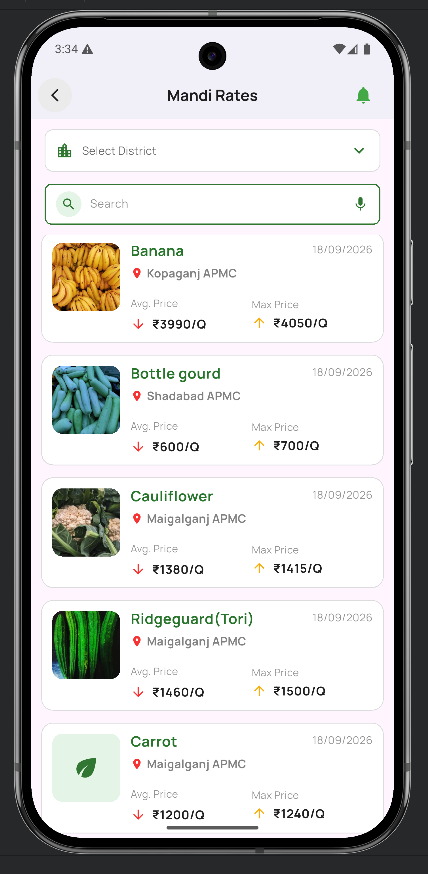
Nkosh Farmer : Smart Farming
A farmer-focused agriculture platform connecting market access, soil testing, crop advisory, farm inputs, smart-farming guidance and produce selling through one mobile experience.
Market linkage
Soil testing
Crop advisory
Smart farming
Photo-based solutions
Agri commerce
 View
 View
 View
 View
 View
 View
 View
 View
 View
 View
▶App walkthroughPlay project video
AT
Legal Consultation · Two-Sided Marketplace
Advocates Talk
A connected legal-consultation platform with separate client and advocate applications. Clients can discover advocates and book consultations, while advocates manage availability, bookings, earnings and client interactions from their own app.
Chat
Audio consultation
Video consultation
Bookings
Payments
KYC
Wallet & withdrawals
Admin operations
Client AppDiscovery · booking · consultation
 View
 View
 View
 View
▶Client app videoPlay demo
Advocate AppKYC · availability · wallet · consultations
 View
 View
 View
 View
▶Advocate workflowPlay video 2
▶Consultation flowPlay video 3
HS
Solar Customer Experience
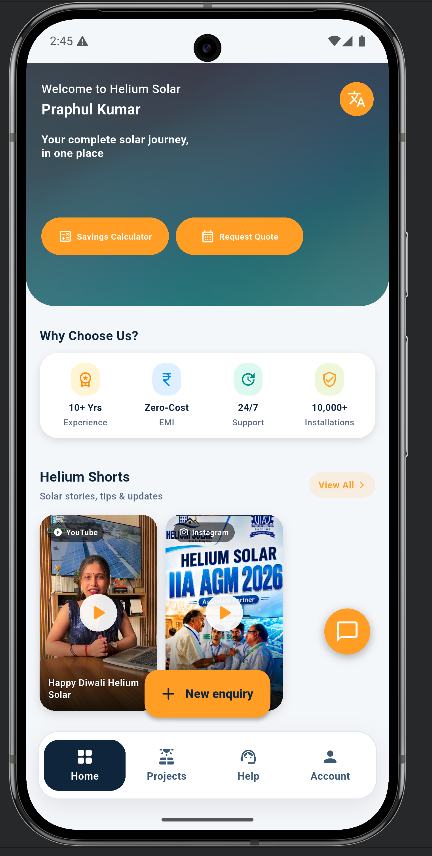
Helium Solar Customer App
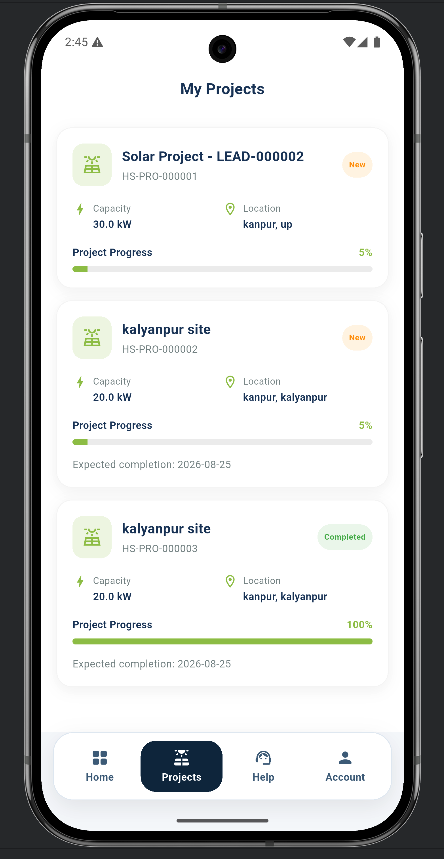
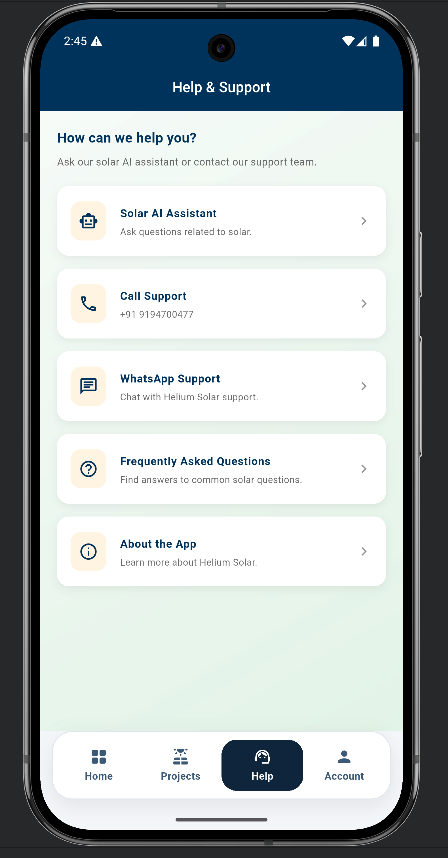
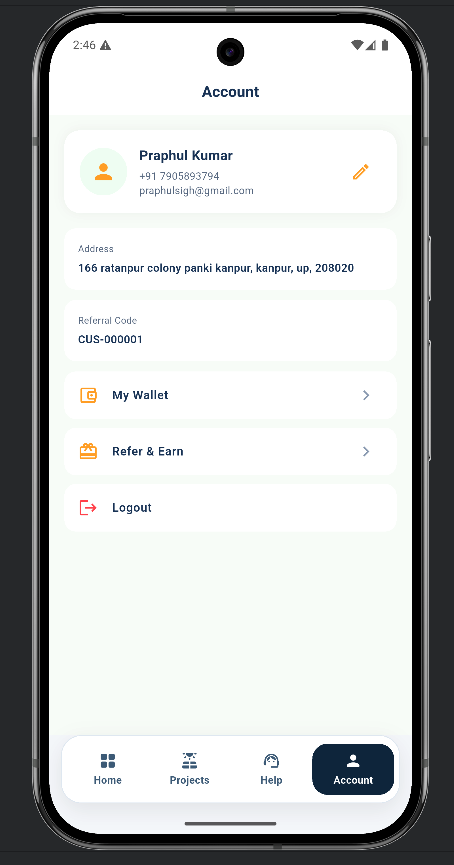
A customer application designed around the solar journey—giving customers one place to view project progress, manage referrals, track rewards and wallet activity, explore solar content and reach support.
Project tracking
Customer dashboard
Referrals
Rewards & wallet
Solar videos
Savings information
Support & FAQs
 View
 View
 View
 View
▶Customer app videoPlay project walkthrough
✓
Real product interfaces. Screenshots and videos shown here are project media supplied for these mobile applications, not stock app mockups.
01 Product & UX Strategy
02 Secure API Architecture
03 Android & iOS Delivery
04 Release & Lifecycle Support
Enterprise mobile applications by ENIGMA
How ENIGMA structures a connected mobile product
Audiences: customers, employees, field teams, dealers, partners and product administrators.
Core architecture: mobile experience, identity, secure APIs, workflow services, enterprise systems and observability.
Operational capabilities: offline execution, synchronization, notifications, payments, evidence capture and approvals.
Delivery: product discovery, UX, architecture, engineering, validation, app-store launch, monitoring and continuous improvement.
Selected published products: Nkosh Farmer for agritech services, Advocates Talk for two-sided legal consultation, and Helium Solar Customer for solar project and referral workflows.
Generic App Build vs Connected Mobile Product
A mobile interface creates access. A connected application completes real business work.
Enterprise value comes from connecting a reliable mobile experience to identity, business rules, systems of record, approvals, communication and measurable outcomes.
Screen-Only Application
The app looks complete but depends on manual work behind every action.
User journeys are designed without operational ownership or exception handling.
Data is copied between the app, spreadsheets and internal systems.
Notifications and status updates are disconnected from actual transactions.
Security, analytics and release processes are added after development.
ENIGMA Mobile Engineering
Experience, workflow, backend and product operations are engineered together.
Each user type receives a focused role-specific journey and permission model.
Actions connect directly with enterprise APIs, rules and systems of record.
Offline behavior, failures, approvals and human intervention are designed.
Testing, security, analytics, releases and support are part of delivery.
Mobile Product Friction We Remove
Applications fail when user experience and business operations are designed separately.
ENIGMA maps users, decisions, data, devices, approvals, exceptions and integrations before engineering the product and its operating backbone.
Broken User Journeys
Users leave the app or contact support because critical actions, status and next steps are unclear.
Disconnected Backend
Mobile actions create separate records that later require manual reconciliation with business systems.
Unreliable Field Connectivity
Field workflows stop when network quality drops because offline behavior and synchronization were not designed.
Weak Access Control
Sensitive customer, employee or partner data is exposed through broad roles or insecure API access.
Release Instability
Updates introduce crashes and workflow failures because environments, testing and rollout controls are incomplete.
Limited Product Intelligence
Leadership cannot see adoption, drop-offs, operational outcomes, errors or user-segment behavior.
Enterprise Mobile Architecture
One secure path from mobile interaction to completed business transaction.
The architecture connects role-specific applications, identity, API control, workflow services, enterprise systems, communication and observability without exposing internal complexity to users.
01
Mobile Experiences
Customer, employee, field, dealer and partner journeys.
02
Identity & Device Trust
Authentication, roles, sessions, devices and consent.
03
API & Workflow Layer
Validation, orchestration, approvals, queues and exceptions.
04
Business Systems
CRM, ERP, HRMS, inventory, payments and service.
05
Communication & Engagement
Push, WhatsApp, SMS, email, chat and support.
06
Analytics & Reliability
Events, crashes, performance, audit and operations.
Role-Specific Mobile Capabilities
Every audience gets the right experience without creating disconnected platforms.
A shared foundation can power multiple applications while preserving distinct interfaces, permissions, data access and operational responsibilities.
CUCustomer Experience
Customer product journeys
Turn discovery, transactions and support into one continuous journey.
Build authenticated customer experiences around onboarding, catalogue, booking, ordering, payments, delivery, documents, loyalty and service.
Registration & Identity
OTP, KYC, profiles, preferences and consent.
Transaction Journeys
Booking, ordering, payment and confirmation.
Status & Documents
Live progress, invoices, receipts and history.
Support & Retention
Tickets, chat, feedback, offers and loyalty.
EMWorkforce Experience
Employee action and approvals
Give employees a secure workplace interface for daily action.
Connect attendance, tasks, approvals, documents, requests, communication and performance to HRMS, ERP and internal workflows.
Attendance & Leave
Location, shifts, requests and approvals.
Tasks & Approvals
Assignments, evidence, escalation and action.
Payslips & Documents
Secure employee records and acknowledgements.
Communication
Announcements, policies, helpdesk and updates.
PTPartner Experience
Dealer and partner operations
Connect dealers, vendors and service partners to governed operations.
Expose only the catalogue, prices, orders, claims, documents, service requests and commercial data each partner is authorized to access.
Catalogue & Pricing
Role-specific products, rates and schemes.
Orders & Fulfilment
Availability, ordering, dispatch and delivery.
Claims & Support
Documents, evidence, status and settlement.
Statements & Performance
Balances, targets, incentives and activity.
FOField Operations
Offline-aware execution
Keep field teams productive even when work happens away from the office.
Support routes, visits, inspections, jobs, proof, collections and service activities with offline-aware synchronization and location controls.
Route & Visit Planning
Assignments, maps, schedules and priorities.
Forms & Evidence
Photos, signatures, readings and documents.
Offline Execution
Queued actions, local data and controlled sync.
Location & Compliance
Geofencing, timestamps and audit evidence.
CSCommerce & Service
Transactions and fulfilment
Connect mobile transactions with fulfilment and after-sales operations.
Build products around ordering, subscriptions, booking, payment, delivery, warranty, support and recurring engagement.
Catalogue & Discovery
Search, recommendations, availability and offers.
Payments & Wallets
Checkout, refunds, subscriptions and history.
Delivery & Booking
Slots, allocation, tracking and completion.
Warranty & Service
Tickets, assets, visits and resolution status.
ANProduct Operations
Administration and analytics
Operate the application with visibility—not guesswork.
Connect user administration, content, configurations, notifications, support, product analytics, crash monitoring and operational dashboards.
User & Role Administration
Access, status, devices and permissions.
Content & Configuration
Banners, forms, rules, catalogues and versions.
Product Analytics
Funnels, cohorts, outcomes and drop-offs.
Reliability Operations
Crashes, API health, alerts and releases.
Connected Mobile Journeys
Mobile value appears when every action continues into the next operational step.
From mobile request to completed fulfilment.
Discover and authenticate
Customer sees eligible products, services or account data.
Submit transaction
Payment, booking or request passes through business validation.
Track completion
Backend status, documents and support remain visible.
From assignment to verified execution.
Receive authorized work
Tasks, visits or approvals follow role and location.
Complete with evidence
Forms, photos, signatures and timestamps are captured.
Update enterprise record
The same transaction updates CRM, ERP, HRMS or service.
From partner demand to controlled delivery.
View authorized terms
Catalogue, prices, limits and programs are personalized.
Submit order or claim
Rules, credit and approval checks run centrally.
Receive connected status
Inventory, finance, logistics and support provide updates.
Integrations & Mobile Infrastructure
The application should connect users to the systems where business actually runs.
The mobile layer can connect to existing enterprise platforms or become the primary interface for a newly engineered digital product.
CRM & Customer Data
ERP & Finance
HRMS & Workforce
Inventory & Logistics
Payments & Banking
Maps, Messaging & Identity
Secure API gateway
Authorize, validate, throttle and observe mobile access to business capabilities.
Offline and synchronization services
Control local data, queues, retries, conflicts and eventual consistency.
Engagement and communication
Connect push notifications, WhatsApp, SMS, email, chat and support.
Release and environment control
Separate development, testing and production with governed deployment pipelines.
Security, Quality & Product Governance
Mobile convenience should not weaken data, access or operating control.
Identity and permission architecture
Control roles, sessions, device access, data scope, consent and account lifecycle.
Secure data and API handling
Use encrypted transport, protected local storage, validation and server-side authorization.
Testing and release discipline
Cover devices, operating systems, workflows, integrations, failures and controlled rollout.
Observability and product operations
Monitor crashes, performance, API errors, critical events, adoption and business outcomes.
Illustrative Operating Scenario
A field employee completes work offline without losing enterprise accountability.
01
Authorized assignment syncs to the device
Only required customer, location and task data becomes available.
02
Employee completes the workflow offline
Forms, photos, readings, signature and timestamps are retained securely.
03
Connectivity returns and synchronization begins
Queued records are validated, conflicts are handled and status is confirmed.
04
Enterprise workflow continues
CRM, service, inventory or finance receives the approved transaction.
This is an illustrative workflow pattern, not a fabricated client result. Final offline, security, synchronization and approval behavior depends on business risk and operating conditions.
What the Engagement Includes
A complete mobile product engineering engagement—not only application screens.
Product & Workflow Blueprint
Users, journeys, business rules, exceptions, ownership and success criteria.
UX & Interface System
Information architecture, prototypes, interaction patterns and reusable components.
Android & iOS Applications
Native or cross-platform applications based on product requirements.
Backend & API Engineering
Identity, workflows, data, integrations, notifications and administration.
Security & Governance Controls
Permissions, storage, API security, environment and audit design.
Testing & Quality Validation
Functional, device, integration, performance and release testing.
Store & Production Deployment
Release preparation, environments, app stores and production rollout.
Monitoring & Product Evolution
Crash analysis, support, updates, analytics and roadmap improvement.
Where Mobile Applications Create Strong Value
Built for organizations where important work must happen beyond a desktop.
The engagement is especially relevant when users need secure access to transactions, tasks, evidence and status from stores, homes, field locations or partner networks.
Customer self-service journeys
Distributed employee operations
Field sales and service teams
Dealer and partner networks
Commerce, booking and delivery
Existing enterprise-system access
Enterprise Scope
Not a low-cost collection of mobile screens.
A reliable application requires product discovery, workflow design, UX, backend architecture, identity, security, integrations, device behavior, quality assurance, releases and ongoing operating ownership.
ENIGMA engagement principle
We engineer the mobile experience and the business system behind it—not only the interface visible on a phone.
Mobile Application Engineering Process
Delivery begins with users and operations—not a fixed app template.
01
Product Discovery
Map audiences, outcomes, workflows, systems, constraints and risks.
02
Journey & UX Design
Design information, interactions, prototypes and exception states.
03
Architecture & Planning
Define platform, APIs, security, data, offline and integration design.
04
Iterative Engineering
Build mobile, backend, admin and integration capabilities in releases.
05
Validation & Launch
Test workflows, devices, performance, security and production readiness.
06
Operate & Improve
Monitor adoption, crashes, outcomes, support and roadmap priorities.
Mobile Applications FAQ
Questions product and technology leaders ask before building mobile applications.
The final architecture depends on audiences, workflows, devices, offline requirements, security, integrations, release strategy, analytics and long-term product ownership.
ENIGMA develops customer applications, employee and field-force applications, dealer and partner applications, commerce and service applications, and specialized operational apps connected to business systems.
Yes. Multiple role-specific applications can use a shared backend, identity layer, APIs and business rules while presenting different interfaces, permissions and workflows to each audience.
Yes. Where the workflow requires it, applications can use controlled offline storage, queued actions, synchronization rules, conflict handling and status visibility when connectivity returns.
Yes. Mobile applications can connect with ERP, CRM, HRMS, inventory, payments, logistics, support, identity, analytics and other systems through secure APIs or integration services.
Security can include authenticated sessions, role-based access, encrypted transport, secure device storage, API authorization, certificate controls, audit events, environment separation and release governance.
The choice depends on performance, hardware access, user experience, release timelines, maintainability and product roadmap. ENIGMA evaluates native, Flutter, React Native and hybrid approaches before recommending the architecture.
Yes. Existing applications can be assessed for UX, code quality, performance, security, API design, analytics and deployment risks, followed by phased modernization or controlled replacement.
Yes. Engagements can include testing, release preparation, Play Store and App Store deployment support, monitoring, crash analysis, updates, security patches and roadmap-based improvement.
Mobile Product Discovery
Let’s map the users, workflows and systems your mobile product must connect.
We’ll assess customer, employee or partner journeys, business rules, APIs, data, security, offline requirements, notifications, analytics and release operations before recommending the right mobile architecture.