RequestCustomer channel
WhatsApp · Voice · Web · Email
ENIGMA designs governed AI business agents that understand requests, use company knowledge, follow operational rules, coordinate with people, and perform approved actions across WhatsApp, voice, web, email, CRM, ERP and internal systems.
Understands
Business Context
Connects
Enterprise Systems
Executes
Controlled Actions
✓ Built with permissions, audit trails, approval checkpoints and human escalation—not uncontrolled automation.
WhatsApp · Voice · Web · Email
Products · SOPs · policies · live records
Intent · permissions · approvals · tool selection
CRM · ERP · APIs · databases · notifications
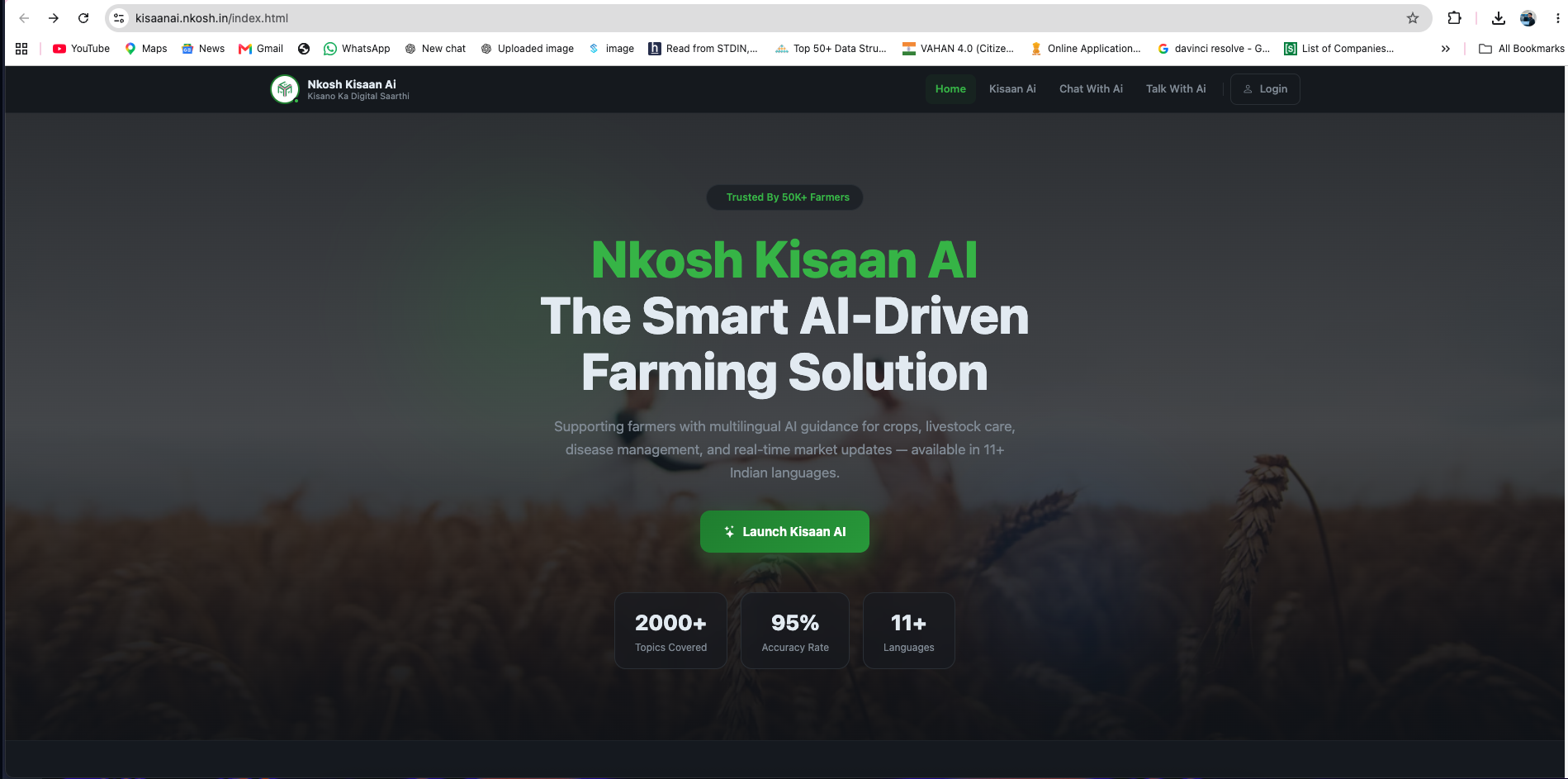
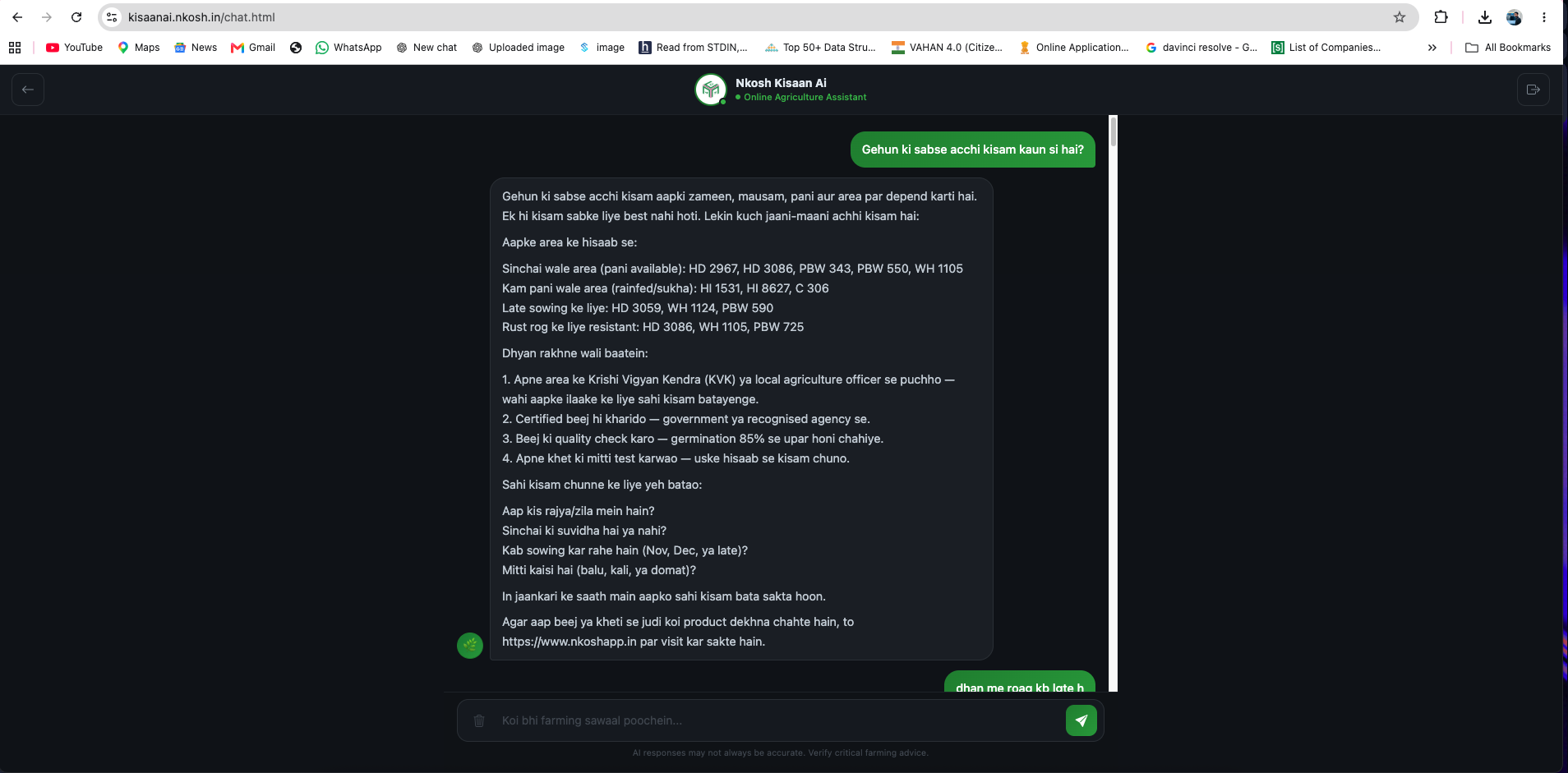
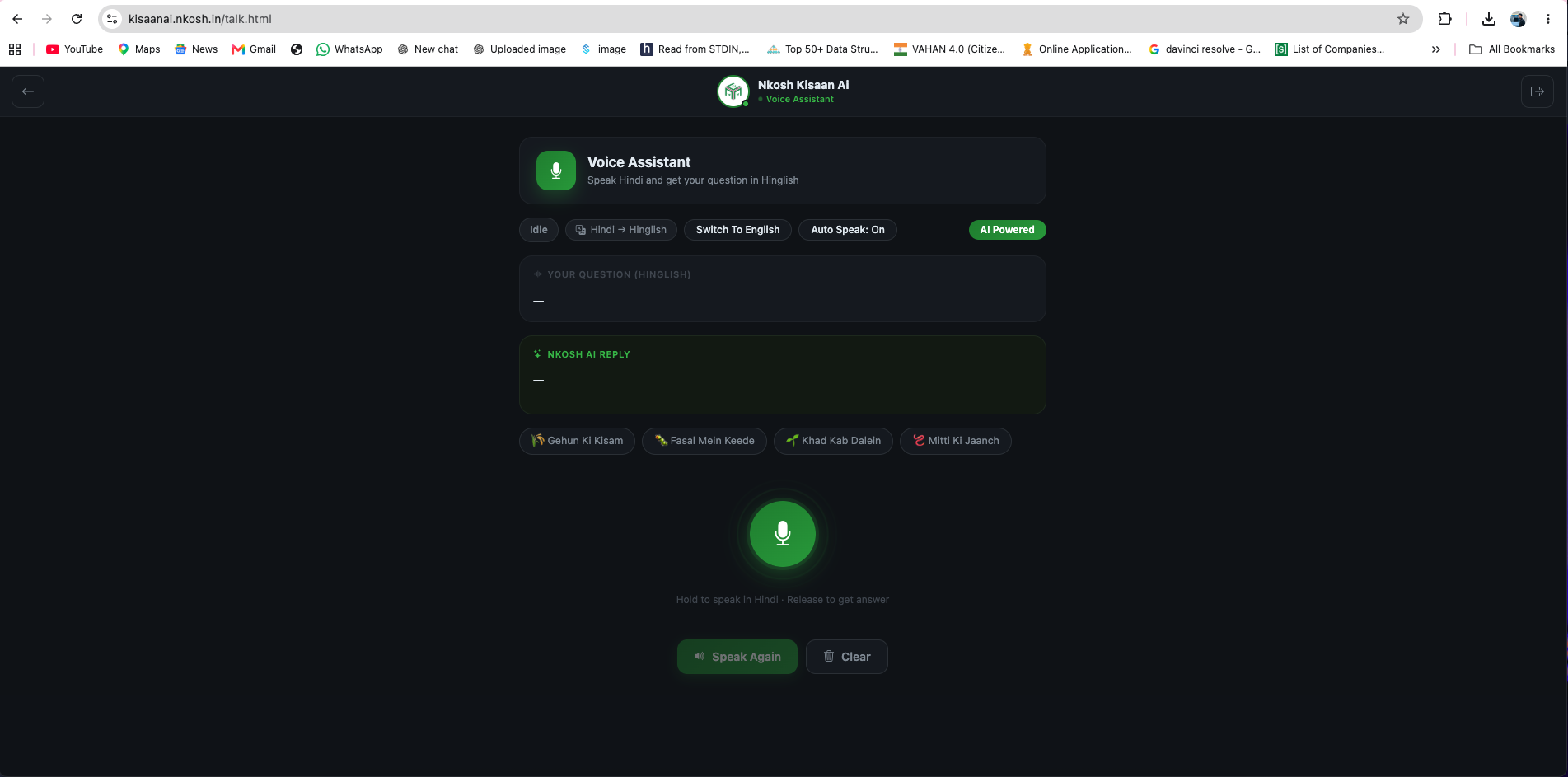
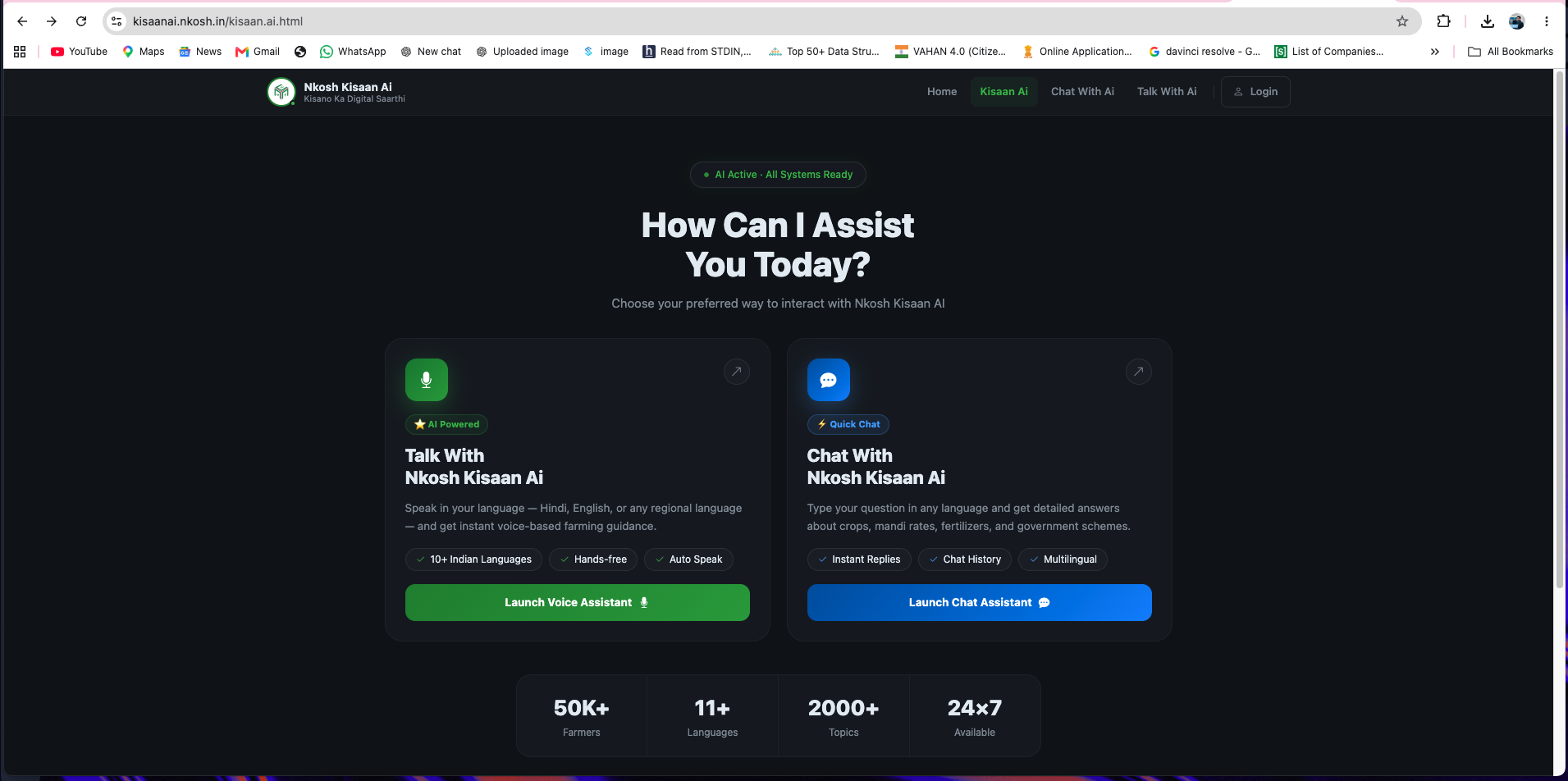
A domain-focused AI experience built for an agritech business, designed to help users interact with agricultural knowledge and workflows through a simpler conversational interface while keeping the product aligned with NKOSH operations.
 View
 View
 View
 View
Actual project interface. The screenshots are shown as product examples from the NKOSH Kisaan AI implementation, not stock AI dashboard artwork.
AI business agents by ENIGMA
Agent inputs: customer or employee requests, approved documents, CRM/ERP records, databases and business APIs.
Decision layer: intent, context, retrieval, workflow rules, role permissions, approval gates and tool selection.
Actions: create or update records, prepare documents, route tasks, trigger notifications, collect data and escalate exceptions.
Governance: identity, source grounding, action boundaries, human approval, audit history, observability and deployment controls.
Selected implementation: NKOSH Kisaan AI is an agritech conversational AI project presented on this page with product screenshots and links to the client and deployed experience.
A chatbot can explain a process. An AI business agent can understand the request, check the relevant policy, collect missing information, create an approved task, update the system of record, notify the responsible person and keep the workflow moving.
Conventional chatbot
Provides generic responses without operational context.
Cannot safely execute actions inside business systems.
Leaves employees to manually complete the actual work.
Often lacks governance, permissions and traceability.
ENIGMA business agent
Uses company knowledge, live data and defined business rules.
Connects customer conversations to CRM, ERP and APIs.
Executes only permitted actions and escalates exceptions.
Maintains activity history, ownership and operational visibility.
We identify repetitive decision points, information gaps and system handoffs where an agent can reduce workload while preserving control.
Enquiries arrive from multiple channels, but response quality and follow-up depend on who is available.
Agent outcome · structured qualification and routing
Information moves manually from calls or messages into CRM, sheets, email and internal applications.
Agent outcome · controlled system updates
Routine requests consume skilled team capacity while customers wait for information already available in company systems.
Agent outcome · immediate grounded assistance
Requests and decisions are difficult to trace when they move through calls, inboxes and informal chat groups.
Agent outcome · governed approval orchestration
Employees search old documents or depend on individuals to interpret products, pricing and operating procedures.
Agent outcome · governed knowledge access
Missed follow-ups, pending documents and delayed tasks surface only when someone manually checks status.
Agent outcome · proactive exception handling
The model is only one component. A reliable business agent requires orchestration, grounded knowledge, identity, permissions, APIs, audit logging and exception handling engineered as one system.
ENIGMA Governed Agent Framework
Channels
Orchestration
Knowledge
Governance
Action layer
Operations
The agent does not simply generate text. It moves through a defined sequence of understanding, validation, permission checks, execution, confirmation and escalation.
Customer or employee request arrives with channel, identity and conversation context.
Intent is identified and relevant knowledge or system information is retrieved.
Business rules, completeness, permissions and approval requirements are checked.
Approved tools update systems, create tasks, generate documents or trigger workflows.
Results are logged, communicated and escalated to a person when exceptions occur.
Each agent is designed around a defined business role, approved tools, specific data access and measurable workflow responsibility.
Sales workflow agent
Qualification, follow-up and CRM execution
The agent engages new leads, asks business-specific questions, identifies fit, retrieves product information, schedules the right next step and maintains CRM discipline.
Business outcome
Faster first response, consistent qualification and fewer enquiries lost between channels.
Capture and identify enquiries
Recognize source, campaign, product interest, location and customer context.
Qualify using your sales logic
Ask structured questions and classify fit without improvising commercial rules.
Prepare the next action
Book meetings, request documents, assign an owner or trigger quotation workflow.
Maintain CRM continuity
Create or update records, notes, activities, reminders and pipeline status.
Customer service agent
Grounded support and case handling
The agent authenticates the customer, retrieves relevant order or service information, answers from approved knowledge and creates structured escalation when human intervention is required.
Business outcome
Quicker answers, cleaner service records and better handoff to support teams.
Authenticate and understand the issue
Connect the conversation to the correct customer, asset, order or service record.
Provide grounded answers
Use approved manuals, warranties, policies, status and troubleshooting procedures.
Create and route service cases
Log issue category, priority, evidence and responsible team with full context.
Follow through to closure
Send updates, collect confirmation and reopen or escalate unresolved cases.
Operations coordination agent
Cross-team task and exception coordination
The agent checks workflow status, identifies missing inputs, reminds owners, creates operational tasks and escalates delays according to defined responsibility and SLA rules.
Business outcome
Better coordination, documented ownership and earlier visibility of operational blockers.
Check workflow readiness
Verify documents, dependencies, approvals, inventory or scheduling requirements.
Coordinate ownership
Assign tasks and communicate the right context to the responsible person.
Track pending actions
Monitor status, remind teams and surface exceptions before they become delays.
Maintain operational history
Record changes, communication, decisions and escalation in one timeline.
Finance workflow agent
Controlled finance preparation and workflow
The agent can collect required information, prepare documents, reconcile workflow data and route exceptions—but financial approvals remain governed by policy and authorized users.
Business outcome
Less administrative effort, clearer pending items and stronger approval traceability.
Collect complete transaction context
Gather invoices, references, project data, customer details and supporting documents.
Prepare documents and requests
Generate approved drafts, payment requests or follow-up communication.
Route for policy-based approval
Send the action to authorized users with context and validation results.
Track pending and exception cases
Identify missing information, due actions and mismatches for human review.
Internal knowledge agent
Approved internal knowledge assistance
The agent helps employees navigate SOPs, product information, policy, project documents and system data while respecting access boundaries and source visibility.
Business outcome
Less dependence on individuals and faster access to consistent operating knowledge.
Search across approved sources
Retrieve relevant passages from documents, portals, databases and knowledge stores.
Answer with business context
Explain procedures based on role, department, product, geography or customer type.
Show source and confidence
Make answers traceable and route uncertain cases to subject-matter owners.
Trigger related workflows
Create a request, task, ticket or approval directly from the knowledge interaction.
We connect the agent to the channels people already use and the systems where business records must remain accurate.
Integration principle
The AI layer coordinates work. Your CRM, ERP and databases remain the controlled systems of record.
Customer conversations, qualification, updates and support.
Voice & Calling
Inbound assistance, outbound follow-up and call workflows.
Web & Portals
Website, customer portal and employee interfaces.
Inbox classification, drafting and structured action capture.
CRM & ERP
Records, tasks, orders, projects, service and approvals.
APIs & Databases
Internal applications, documents, payments and data services.
Control framework
The agent identifies who is asking and what data or actions that role is permitted to access.
Required fields, eligibility, limits and policy conditions are validated before execution.
Sensitive or high-impact actions pause for authorized review rather than bypassing accountability.
Requests, retrieved sources, decisions, actions, failures and overrides remain traceable.
Uncertain, incomplete or unusual cases are routed to the correct person with context.
Business leaders should always know what an agent can access, which actions it can perform, when approval is required and how decisions can be reviewed.
Role-based access
Different capabilities for customers, employees, managers and administrators.
Source-grounded answers
Responses tied to approved knowledge instead of unrestricted improvisation.
Data protection design
Controlled data flow, secret management and deployment architecture.
Human escalation
Clear fallback when confidence, policy or business context requires judgment.
We select models, hosting and integration patterns based on business risk and operating constraints—not because one vendor or architecture fits every organization.
Managed cloud
Secure cloud-hosted orchestration using managed AI and application services with monitoring and controlled integrations.
✓Suitable for rapid rollout
✓Scalable managed infrastructure
✓Integrated monitoring and support
Private cloud / VPC
Agent services deployed inside a controlled cloud network with private connectivity to enterprise systems and databases.
✓Network and access isolation
✓Private system connectivity
✓Enterprise governance alignment
Self-hosted / private AI
Open-source or private model infrastructure designed for organizations with specific privacy, ownership or operating requirements.
✓Private model environment
✓Controlled data residency
✓Infrastructure ownership options
The useful part is not the conversation style. It is the agent’s understanding of your workflow, terminology, decision rules, documents and systems.
Qualify project enquiries, collect bill/site details, coordinate surveys, prepare workflow inputs and update project status.
Lead → Survey → BOQ → Project
Handle property enquiries, match inventory, schedule site visits, track documents and maintain CRM follow-up.
Lead → Site Visit → Booking
Assist dealer requests, product knowledge, order status, service cases and internal operational coordination.
Dealer → Order → Service
Answer shipment questions, coordinate exceptions, update delivery records and alert responsible operations teams.
Order → Dispatch → Delivery
Guide farmers or channel partners, capture field issues, retrieve approved knowledge and connect marketplace workflows.
Issue → Guidance → Marketplace
Support onboarding, policy questions, lead distribution, inventory requests and performance workflows.
Partner → Lead → Operations
Coordinate non-clinical appointment, service, document and administrative workflows with strict access boundaries.
Request → Schedule → Record
Qualify service requests, collect evidence, schedule resources, update customers and manage escalation.
Request → Assignment → Closure
The agent is designed only after we understand the work, decisions, data, risk and system boundaries involved.
Map current communication, manual work, decisions, systems and operational bottlenecks.
Define what the agent may understand, decide, recommend, execute or escalate.
Identify trusted knowledge, live data sources, access policies and retrieval strategy.
Connect APIs and systems with validation, permissions, approvals, logs and fallback.
Test realistic cases, edge conditions, failures, handoffs and business acceptance criteria.
Deploy with monitoring, review agent performance and expand responsibility safely.
This is an example of how an enterprise sales agent can coordinate a process. It is not presented as a client result or fabricated case study.
Operational impact
Consistent lead handling, complete CRM context and faster handoff to the right sales owner.
Customer asks about a service on WhatsApp
The agent identifies intent, location, business type and conversation source.
Agent follows approved qualification logic
It asks required questions, validates responses and retrieves relevant service information.
CRM record and recommended action are prepared
The lead, summary, qualification result, source and next step are structured.
Assignment or approval follows business rules
The correct owner receives complete context, or an approval request is created if required.
Customer and management retain visibility
Confirmation is sent, follow-up is scheduled and every action remains traceable.
Technology selection is based on workflow, latency, security, language, cost and deployment requirements.
AI & Orchestration
OpenAI, private models, open-source LLMs, agent orchestration, RAG and voice AI.
Backend & APIs
Java, Spring Boot, Node.js, Python, .NET, REST APIs and WebSocket services.
Data & Knowledge
MySQL, PostgreSQL, MongoDB, Redis, vector search and governed document stores.
Infrastructure
AWS, Azure, Linux, Windows Server, Docker, Kubernetes, Nginx, IIS and Cloudflare.
A serious agent project requires clarity about control, integration, data and operating responsibility.
No. A chatbot primarily handles conversation. A business agent combines conversation with company knowledge, workflow logic, system integrations, permissions and approved actions. It can move work forward instead of only providing a response.
Yes, when the system provides an API, database interface or approved integration path. We define exactly which records and actions are permitted, validate information before execution and preserve an audit trail.
Only within the responsibility and limits you approve. Routine low-risk actions may be automated, while sensitive commercial, financial or operational decisions can require human authorization.
Yes. We can design a grounded knowledge layer using approved documents, policies, product data, SOPs and internal information, with role-based access and source traceability.
Yes. Depending on requirements, the agent can use managed cloud services, a private cloud or VPC, or self-hosted open-source model infrastructure.
We first map repetitive work, decision rules, information sources, system handoffs, exception risk and business impact. An agent is recommended only where it creates meaningful operational value.
We will study the workflow, systems, decisions, data and control requirements before recommending an architecture.
Business workflow first · Technology second · Controlled deployment always